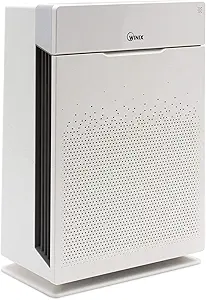
Pure Enrichment vs Winix: Overview & Brand Philosophy
The residential air purification market is broadly divided between brands that prioritize lifestyle integration and those anchored in industrial-grade air treatment. Pure Enrichment falls distinctly into the former category. Established with an emphasis on personal wellness and home comfort, Pure Enrichment designs air purifiers that are compact, aesthetically pleasing, and user-friendly. Their product design philosophy targets bedrooms, nurseries, and home offices, viewing air purification as an ambient, non-intrusive component of daily health routines. The brand focuses heavily on accessibility, multi-stage basic filtration, and visual harmony with modern home decor.
Conversely, Winix is a legacy appliance manufacturer with South Korean engineering roots, focusing on high-volume, performance-driven air treatment. Winix designs its units to tackle severe indoor air pollutants, such as wildfire smoke, pet dander, and industrial volatile organic compounds (VOCs). Their philosophy centers on high Clean Air Delivery Rates (CADR), active molecular neutralization, and automated continuous monitoring. While Pure Enrichment aims to quietly improve personal breathing zones, Winix builds high-throughput appliances engineered to cycle the air in large living rooms, basements, and open-concept spaces multiple times per hour.
Key Differences & Technological Comparison
The primary technological divergence between Pure Enrichment and Winix lies in their proprietary filtration stages, air processing volume, and sensor integration. Winix relies on an advanced mechanical and chemical matrix anchored by its proprietary PlasmaWave® technology. PlasmaWave operates as an active filtration stage, creating dual-polarity ions that break down viruses, bacteria, chemical vapors, and odors at a molecular level without producing harmful levels of ozone. Paired with certified True HEPA filtration and high-grade activated carbon pellets, Winix units are engineered for intensive remediation.
Pure Enrichment predominantly leverages passive filtration combined with supplementary ultraviolet (UV-C) sanitization in models like the PureZone series. Their typical arrangement employs a 3-stage or 4-stage system: a pre-filter for large debris, an activated carbon filter for basic odor adsorption, a True HEPA layer for 99.97% particulate capture down to 0.3 microns, and a built-in UV-C light to neutralize airborne pathogens on the filter surface. While effective for localized sanitization, Pure Enrichment purifiers generally do not match the raw air volume moving capacity of Winix units.
Another major difference is sensor architecture and automation. Winix purifiers typically feature smart air quality indicators paired with optical dust sensors and, in mid-to-high tier models, VOC odor sensors. These units operate on dynamic auto-modes that adjust fan speeds in real-time according to ambient pollution spikes. Pure Enrichment units, particularly the widely popular PureZone and PureZone Halo, lean toward simpler manual controls, multi-speed manual toggles, and preset sleep timers, making them more predictable but less responsive to sudden air quality degradation.
Pros & Cons Comparison
Pure Enrichment
- Pros:
- Compact, space-saving designs ideal for nightstands, desks, and small bedrooms.
- Inclusion of UV-C sanitization technology in select entry-level models.
- Extremely quiet operational noise on low settings, suitable for light sleepers.
- Industry-leading 5-year warranty on many core models, demonstrating customer service reliability.
- Cons:
- Significantly lower CADR ratings; underpowered for medium-to-large spaces.
- Thin carbon fabric sheets rather than granular carbon, reducing longevity against heavy VOCs.
- Limited automated smart sensing features across the budget catalog.
Winix
- Pros:
- Exceptional air throughput (CADR) optimized for medium, large, and open-concept rooms.
- Proprietary PlasmaWave® technology provides active chemical and biological reduction.
- Robust automated modes driven by dual particulate and odor smart sensors.
- High availability of multi-packs and cost-effective OEM/aftermarket replacement filters.
- Cons:
- Substantially larger footprints that are difficult to conceal in small rooms.
- Aesthetic designs are functional and utilitarian rather than design-forward.
- PlasmaWave, while certified safe, generates faint clicking sounds that may bother sensitive users.
Performance, Durability & Value Analysis
From an empirical performance perspective, Winix holds a commanding lead in particulate clearance velocity. In spaces exceeding 300 square feet, a flagship unit like the Winix 5500-2 or Winix AM90 can clear airborne particulates, pet dander, and cooking fumes in a fraction of the time required by Pure Enrichment’s flagship PureZone Elite. Winix uses heavy-duty blowers and motor housings that endure continuous high-speed usage without overheating or significant motor degradation, making them a fixture in homes subject to regular wildfire smoke or multi-pet shedding. In terms of consumable costs, Winix provides high square-footage-per-dollar value, as their filters generally last a full 12 months under standard conditions.
Pure Enrichment excels in targeted, micro-environment durability and lower upfront cost. While its small-form-factor DC fans cannot compete with the sheer cubic-feet-per-minute (CFM) output of Winix, they draw minimal power and exhibit virtually no vibration or mechanical resonance at low speeds. The brand's decision to back their products with a 5-year warranty outperforms the standard 1-to-2-year warranties offered by competitors in the entry-level bracket, offsetting the cost of more frequent filter replacements (typically required every 6 months). For users who simply require consistent, localized allergen control without an industrial footprint, Pure Enrichment delivers reliable longevity for under $100.
Final Verdict: Which Brand Should You Choose?
Choose Pure Enrichment if your primary objective is targeted air purification for a nursery, small bedroom, dorm, or home office under 200 square feet. Their devices are uniquely suited for consumers who prioritize whisper-quiet operation, integrated UV-C biological defense, modern design aesthetics, and the long-term peace of mind provided by an extensive 5-year warranty. It is the superior lifestyle choice for localized, non-disruptive air cleaning.
Choose Winix if you require heavy-duty air remediation for large living areas, open-plan apartments, or homes dealing with persistent allergens, multiple pets, or seasonal smoke intrusion. With superior CADR metrics, true granular carbon filtration, smart automated sensing, and PlasmaWave® molecular breakdown, Winix provides superior functional performance and long-term cost-efficiency for comprehensive, whole-home air purification.
Features
When evaluating the functional capabilities of air purifiers, Pure Enrichment and Winix target distinctly different operational philosophies through their feature sets. Pure Enrichment focuses heavily on compact convenience, wellness integration, and straightforward user interfaces. Their popular PureZone line frequently incorporates built-in ultraviolet (UV-C) light sanitization alongside multi-stage filtration, an engineering inclusion designed to neutralize airborne pathogens and bacteria rather than just trap them. Additionally, Pure Enrichment emphasizes bedroom-friendly utility, often equipping their units with optional aromatherapy scent pads, whisper-quiet sleep modes, and gentle integrated nightlights. While these features make Pure Enrichment exceptionally well-suited for personal spaces, nurseries, and small bedrooms, their technical feature set remains largely static, relying on manual speed toggles and rudimentary countdown timers rather than responsive, data-driven automation.
In contrast, Winix engineers its air purifiers with a focus on advanced environmental sensing and dynamic air cleaning technologies scaled for larger living areas. The centerpiece of the Winix technical suite is its proprietary PlasmaWave technology, an active bipolar ionization system that breaks down odors, chemical vapors, and pollutants at a molecular level without producing harmful levels of ozone. Furthermore, Winix significantly outpaces Pure Enrichment in terms of autonomous operation. Most Winix models, such as the industry-staple 5500-2 and C545, feature dual-stage Smart Sensors that continuously monitor both ambient particulate matter and volatile organic compounds (VOCs). These sensors actively drive an intuitive Auto Mode that modulates fan speeds in real-time, augmented by light-sensing technology that automatically activates an ultra-low-energy, blackout Sleep Mode when the room darkens. Select modern Winix models also incorporate Wi-Fi connectivity and companion app support for remote scheduling and real-time air quality indexing.
Ultimately, the practical trade-offs regarding features boil down to holistic personal comfort versus high-capacity automated performance. Pure Enrichment offers high-value tactile and wellness features—such as UV-C sterilization, essential oil diffusion, and unobtrusive physical designs—that require low technical literacy but deliver limited performance feedback. Winix, conversely, delivers a far more technically sophisticated suite geared toward comprehensive, hands-off air governance. For users who prioritize autonomous air quality monitoring, active molecular breakdown via PlasmaWave, and precise feedback on indoor pollutants, Winix stands out as the superior choice, whereas Pure Enrichment remains best suited for consumers seeking integrated secondary wellness features in personal-sized packages.
Performance
When evaluating core filtration performance, Winix holds a commanding engineering advantage over Pure Enrichment, primarily driven by its superior Clean Air Delivery Rate (CADR) metrics and proprietary multi-stage filtration architecture. Winix purifiers, exemplified by industry benchmarks like the 5500-2 and C545, are engineered with high-volume centrifugal fans and deep, true HEPA filters paired with dense, activated carbon pellets. This hardware configuration is bolstered by Winix's PlasmaWave technology, which acts as a secondary molecular stage to break down airborne pollutants, VOCs, and odors at an ionic level without emitting harmful ozone. In contrast, Pure Enrichment—largely represented by its popular PureZone lineup—relies on a more compact, traditional 3-in-1 cylindrical or flat filter setup, frequently supplemented by a small UV-C light. While the UV-C sanitization theoretically targets biological pathogens, the limited dwell time of air passing through the chamber minimizes its real-world efficacy compared to the immediate, high-throughput catalytic destruction offered by Winix’s PlasmaWave system.
The performance disparity becomes increasingly evident when mapping both brands to room size capacity, air turnover rates, and operational intelligence. Pure Enrichment purifiers are fundamentally designed for personal zones and small spaces, such as home offices or compact bedrooms generally under 200 to 300 square feet; their lower cubic-feet-per-minute (CFM) output struggles to achieve the standard industry recommendation of 4 to 5 Air Changes per Hour (ACH) in medium-to-large layouts. Conversely, Winix models are built for spaces exceeding 350 to 500 square feet, moving substantially higher air volumes with significantly less motor strain. Furthermore, Winix incorporates responsive, real-time particle and odor sensors that rapidly modulate fan speeds automatically when ambient air quality degrades. Pure Enrichment units typically offer rudimentary, manual fan-speed toggles and lack the sophisticated automated feedback loops required to address sudden spikes in particulate matter, like smoke or heavy dust, efficiently.
From an acoustic and energy-efficiency standpoint, the trade-offs reflect each brand's physical footprint and structural engineering. Pure Enrichment excels in whisper-quiet, low-draw desktop utility where ultra-compact dimensions and modest static pressure are sufficient for localized, near-body filtration. However, when pushed to their highest settings to clear a polluted room, Pure Enrichment's smaller blowers generate higher-pitched aerodynamic whine relative to the volume of air cleaned. Winix leverages larger, aerodynamically optimized fan blades that maintain lower RPMs while achieving superior CFM, resulting in a deeper, less intrusive white noise profile even at elevated purification tiers. Ultimately, for consumer environments requiring rigorous particulate reduction, rapid odor neutralization, and expansive room-wide circulation, Winix decisively out-performs Pure Enrichment, which remains best suited as a supplemental, small-space filtration appliance.
Design
From an industrial design and engineering standpoint, Pure Enrichment and Winix represent two distinctly different philosophies tailored to contrasting operational scales. Pure Enrichment focuses predominantly on compact, minimalist aesthetics engineered specifically for desktop surfaces, nightstands, and small residential quarters. Their units, such as the widely recognized PureZone line, showcase sleek, cylindrical, or softly curved monolithic silhouettes composed of lightweight ABS plastics with modern matte finishes. Winix, by contrast, engineers its air purifiers with an emphasis on heavy-duty, large-capacity residential filtration, resulting in substantially larger, architectural tower and console forms like the C545 and 5500-2. Winix prioritizes structural rigidity and optimized fluid dynamics, employing expansive perforated front and dual-side intake grilles designed to pull massive volumes of air through a deep internal chassis, reflecting an appliance-first build quality compared to Pure Enrichment's consumer-electronic aesthetic.
The technical interface and functional layout further highlight the divergence in their design execution. Pure Enrichment adopts a streamlined, low-friction user experience by integrating intuitive, touch-capacitive control panels that sit flush with the top surface. These interfaces emphasize simplicity, featuring discreet LED backlighting and consolidated timers, fan speeds, and sleep modes that preserve a clean visual profile without overwhelming the user. Winix takes a far more data-forward and technical approach to user interface design. Their control consoles typically incorporate visible, multi-stage air quality LED indicator bars powered by dedicated infrared or particulate laser sensors, along with tactical physical buttons or smart-touch panels. Furthermore, Winix’s internal layout accounts for proprietary PlasmaWave technology emitters and thicker, multi-layer modular filter cassettes, necessitating a more complex internal compartmentalization and a more sophisticated airflow channel than Pure Enrichment’s straightforward 3-in-1 cylindrical filter core design.
Ultimately, the practical trade-offs regarding design center around space efficiency versus throughput capacity. Pure Enrichment excels in contextual integration; their devices boast negligible footprints, high portability, and whisper-quiet acoustic damping, making them an ideal visual complement to bedrooms, nurseries, and personal offices where a bulky appliance would be an eyesore. However, this compact architecture sacrifices raw processing power and multi-directional airflow reach. Winix purifiers, conversely, make an unapologetic demand on floor space and physical presence, serving as prominent fixtures rather than subtle accents. While Winix delivers superior airflow engineering, tool-less filter access via magnetic front panels, and robust aerodynamic efficiency capable of servicing open-concept spaces, their utilitarian, semi-industrial aesthetic may clash with contemporary minimalist interiors that Pure Enrichment accommodates effortlessly.