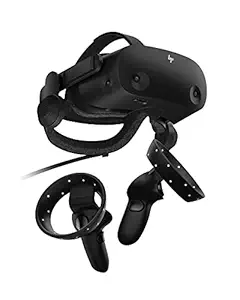
HP vs Samsung: Overview & Brand Philosophy
The virtual reality landscape has evolved from an experimental frontier into a specialized technology market catering to gamers, creative professionals, and enterprise operations. Within the PC-based VR ecosystem, particularly during the era of Microsoft’s Windows Mixed Reality (WMR) platform, Hewlett-Packard (HP) and Samsung emerged as two of the most influential hardware partners. While both brands sought to lower the barrier of entry to tethered, high-end PC VR, their engineering philosophies and target demographics diverged significantly as the market matured.
HP positioned itself as the standard-bearer for fidelity, precision, and enterprise integration. Transitioning from early consumer-grade headsets to professional-grade hardware, HP culminated its VR efforts with the Reverb series, specifically the Reverb G2 (developed in partnership with Valve and Microsoft). HP's philosophy centers on uncompromising visual clarity, ergonomic balance for extended use, and deep integration into commercial simulation, architectural design, and dedicated flight or racing simulator communities. Rather than chasing mass-market mobile convergence, HP focused on the raw power achievable through tethered PC computing.
Conversely, Samsung approached virtual reality through the lens of display dominance and consumer multimedia immersion. Renowned globally for its mobile AMOLED technology, Samsung entered the market aiming to fix the biggest visual shortcomings of early VR: the "screen-door effect" and poor contrast. The Samsung Odyssey and Odyssey+ prioritized rich, cinematic visuals, integrated premium AKG audio, and wider fields of view out of the box. Samsung’s philosophy leaned toward delivering an all-in-one, enthusiast-level consumer entertainment hub, treating VR as an extension of its vibrant, consumer-first personal electronics ecosystem.
Key Differences & Technological Comparison
When comparing HP and Samsung in the VR domain, the most profound technical differentiation lies in display architecture, optical clarity, tracking implementation, and industrial design.
Display and Optics: The battle between HP and Samsung is fundamentally a clash between ultra-dense LCD and advanced AMOLED. HP’s flagship, the Reverb G2, features dual 2.89-inch LCD panels delivering an industry-leading resolution of 2160 x 2160 pixels per eye, paired with custom lenses designed by Valve. This results in edge-to-edge text legibility, minimal chromatic aberration, and a virtually non-existent screen-door effect (SDE). Samsung tackled SDE differently on the Odyssey+ using its proprietary "Anti-SDE AMOLED" display, which applies a grid-diffusing layer over dual 1440 x 1600 panels. While Samsung offers far superior black levels, infinite contrast ratios, and saturated colors, HP unequivocally wins in pixel density, sharpness, and clarity for fine details.
Tracking and Controllers: Both brands relied primarily on inside-out tracking powered by Windows Mixed Reality, meaning neither requires external sensor lighthouses. However, hardware execution differs. Early Samsung Odyssey headsets utilized a standard two-camera array, which provided a limited tracking volume prone to blind spots when hands moved out of peripheral view. HP upgraded the Reverb G2 to a four-camera configuration (two front, two side), notably expanding the controller tracking volume. Both utilize standard WMR motion controllers, but HP revised the ergonomics of its controllers to more closely mimic the Oculus Touch layout, removing the divisive WMR trackpads in favor of dedicated analog sticks and buttons.
Audio and Ergonomics: Audio is a strength for both systems, albeit engineered differently. Samsung integrated spatial audio directly into the headset via high-performance AKG-tuned on-ear headphones, offering rich low-end frequency response. HP, leveraging its partnership with Valve, implemented off-ear spatial speakers identical to those found on the Valve Index. These hover just off the ear, providing exceptional spatial positioning and comfort without causing ear fatigue or heat buildup. Ergonomically, HP favors a balanced, lightweight chassis with a removable magnetic face gasket, whereas Samsung utilizes a halo-strap design that distributes weight onto the forehead, which can feel front-heavy during long sessions.
Pros & Cons Comparison
HP VR Headsets
- Pros:
- Market-leading visual resolution (2160 x 2160 per eye) with pristine text readability.
- Custom Valve-designed off-ear speakers deliver immersive, fatigue-free audio.
- Lightweight chassis with exceptional weight distribution and facial comfort.
- Four-camera inside-out tracking expands the vertical and lateral interaction volume.
- Physical mechanical interpupillary distance (IPD) adjustment slider.
- Cons:
- LCD panels lack the deep, inky blacks found in OLED alternatives.
- Controllers lack capacitive touch sensing for natural hand resting poses.
- High resolution requires a powerful, premium-tier PC graphics card (GPU).
Samsung VR Headsets
- Pros:
- Dual AMOLED panels provide unbeatable contrast, vivid colors, and true blacks.
- Patented Anti-SDE technology virtually eliminates pixel grid lines on lower-resolution panels.
- Integrated AKG on-ear headphones provide robust, punchy sound with solid bass.
- Easy-to-adjust halo-style headband suitable for rapid donning and doffing.
- Physical IPD adjustment dial allows quick visual sweet-spot calibration.
- Cons:
- Anti-SDE layer introduces a soft, slightly blurred visual filter over high-detail elements.
- Two-camera tracking has a smaller tracking volume with frequent dead zones behind and above the user.
- Bulkier, heavier form factor can lead to neck strain during prolonged use.
- Controller build quality feels plasticky and retains the awkward legacy WMR trackpad.
Performance, Durability & Value Analysis
In terms of raw real-world performance, HP generally outpaces Samsung for technical workloads, flight simulations, and competitive sim-racing. The Reverb’s 90Hz refresh rate backed by Valve's custom optics presents the digital environment with absolute spatial coherence, making gauge clusters, cockpit instruments, and distant targets crystal-clear. Samsung excels primarily in experiential and atmospheric software; games set in dark environments, such as space exploration or horror titles, shine on Samsung's AMOLED displays in ways HP's LCD backlights cannot replicate. However, the slightly softened focus created by Samsung’s Anti-SDE diffuser degrades micro-level sharpness, making it less viable for productivity or detailed rendering.
From a durability and longevity standpoint, HP hardware demonstrates superior industrial design tailored for continuous commercial duty cycles. The cables are reinforced, the face interfaces are easily replaceable, and the minimalist physical structure has fewer moving parts that can wear down. Samsung headsets, while sturdy, suffer from wear and tear on the halo hinge tension mechanism and fixed foam pads that are harder to sanitize or replace. In the modern market, value is dictated heavily by the current trajectory of WMR software support; buyers must factor in operating system compatibility, as both manufacturers lean on legacy platforms that require specific software workarounds to remain fully viable alongside SteamVR on modern operating systems.
Final Verdict: Which Brand Should You Choose?
Selecting between HP and Samsung comes down to your primary use case, visual preferences, and hardware requirements.
Choose HP if: You are an enthusiast of flight simulators (e.g., Microsoft Flight Simulator), racing rigs (e.g., iRacing, Assetto Corsa), or professional 3D design applications. If visual sharpness, high pixel density, legible instruments, and lightweight comfort over multi-hour sessions are non-negotiable priorities, HP—specifically the Reverb G2—is the undisputed choice. It stands as one of the finest tethered PC VR headsets ever built for seated simulation.
Choose Samsung if: You prioritize visual atmosphere, cinematic media consumption, and the distinctive visual depth that only OLED technology can provide. If you play games heavy on shadows and dark palettes (such as elite space simulations or atmospheric horror), and you prefer the punchy bass response of integrated AKG headphones on a budget, Samsung's Odyssey line provides an engaging, vibrant experience—provided you can tolerate a softer overall image and narrower controller tracking boundaries.
Features
When evaluating the feature ecosystems of HP and Samsung in the virtual reality space, the comparison primarily hinges on high-end enterprise PC-VR fidelity versus mobile-integrated accessibility and panel technology. HP, most notably represented by its Reverb G2 series, engineered its feature set to dominate visual clarity and desktop productivity. Boasting industry-leading resolution (2160 x 2160 per eye), physical interpupillary distance (IPD) adjustment, and advanced off-ear spatial audio drivers developed in collaboration with Valve, HP prioritizes sensory fidelity for simulation enthusiasts and professionals. In contrast, Samsung’s presence—spanning the mobile Gear VR heritage to the premium Windows Mixed Reality Odyssey lineup—places greater engineering emphasis on display vibrancy and ergonomic convenience. Samsung pioneered the use of custom dual-AMOLED displays in PC-VR, integrating an anti-screen-door-effect (Anti-SDE) optical diffusion layer alongside built-in AKG-tuned spatial headphones and a wider 110-degree field of view, presenting a feature set heavily tailored toward immersion and color reproduction rather than raw pixel density.
The functional trade-offs between the two brands become pronounced when examining tracking architecture, sensor integration, and user adjustability. HP’s later iterations expanded their camera array to a four-camera inside-out tracking system, markedly reducing dead zones compared to first-generation hardware, while enterprise editions integrated biometric sensors capable of eye-tracking and pupillometry. However, HP's feature set is rigidly tied to a high-powered PC via tethered DisplayPort cabling, restricting mobility and demanding substantial computational overhead. Samsung’s Odyssey+ relies on a more rudimentary two-camera tracking system, which offers a slightly narrower tracking volume for controllers, but compensates with user-centric engineering features such as the patented "Flashlight" pass-through mode, a mechanically robust halo headband, and native integration with the Samsung ecosystem. Ultimately, HP captures the edge for technical features geared toward uncompromising analytical precision and graphical sharpness, whereas Samsung’s feature philosophy leans into organic visual warmth, superior native black levels, and frictionless multimedia ergonomics.
Performance
When evaluating performance in the virtual reality space, HP has historically targeted high-end fidelity and visual clarity, whereas Samsung leaned into graphical vibrance and ecosystem versatility. HP's flagship endeavor, exemplified by the Reverb G2 (developed in collaboration with Valve and Microsoft), set an industry benchmark for PC-VR visual engineering. Delivering an impressive 2160 x 2160 resolution per eye combined with custom-designed Valve lenses and an expansive 114-degree field of view, HP's hardware eliminates the screen-door effect and excels in text legibility and micro-detail. In contrast, Samsung's primary foray, the Odyssey and Odyssey+ line, prioritized display innovation via custom anti-SDE AMOLED panels. While the Odyssey headsets offered lower native resolution (1440 x 1600 per eye), Samsung's engineering strength produced superior contrast, rich color saturation, and true blacks that LCD-based headsets like HP’s simply cannot reproduce, though at the expense of absolute edge-to-edge optical sharpness.
In terms of tracking performance, processing overhead, and controller fidelity, both manufacturers faced distinct technical trade-offs dictated by their reliance on the Windows Mixed Reality (WMR) tracking architecture. HP attempted to resolve standard inside-out tracking limitations by engineering a four-camera array into the Reverb G2, drastically expanding the volume of trackable space compared to early two-camera designs. However, the system occasionally suffers from controller dead zones and sub-optimal latency when hands are held close to the face or relaxed at the hips. Samsung, operating primarily on a two-camera inside-out tracking array in its Odyssey line, provides a narrower tracking volume, yet the integrated Bluetooth controllers often demonstrated marginally smoother pairing stability and lower input jitter than early HP implementations. Furthermore, driving HP’s staggering pixel count demands a high-tier graphical processing unit (GPU), introducing a severe performance barrier for modest PC rigs, while Samsung's slightly lower resolution delivers a more forgiving performance profile that sustains steady frame rates (up to 90 Hz) on mid-tier hardware.
Ultimately, the performance verdict between the two brands depends on the user's specific performance priorities: raw visual fidelity versus vibrant cinematic contrast. HP holds a definitive technical advantage for simulation enthusiasts—such as those dedicated to flight and racing sims—where high-resolution instrumentation readability and pinpoint sub-pixel rendering outweigh the limitations of its tracking controllers. Conversely, Samsung’s engineering favored holistic, atmospheric immersion through punchy OLED performance and broader sweet spots, offering a balanced, less resource-taxing alternative. While both brands share the fundamental constraints of PC-tethered tracking frameworks, HP pushes the technological ceiling for sheer computational visual performance, whereas Samsung historically offered a more balanced, color-rich display pipeline with a lower barrier to entry.
Design
When evaluating industrial design and ergonomic engineering in the PC-tethered virtual reality market, HP and Samsung represent two fundamentally distinct philosophies. HP, particularly through its flagship Reverb G2 developed in collaboration with Valve, prioritizes high-fidelity realism, thermal management, and long-session comfort. The Reverb series is engineered around an ultra-lightweight chassis that utilizes high-grade, matte plastics paired with breathable, magnetic memory foam facial interfaces. A primary technical triumph of HP's physical design is its floating off-ear speaker system borrowed from the Valve Index; this design choice not only drastically reduces localized heat buildup around the ears but also enhances spatial acoustics without physical contact. In contrast, Samsung’s VR legacy—anchored by the Odyssey and Odyssey+ Windows Mixed Reality headsets—leans toward an automotive-inspired, premium aesthetic marked by glossy finishes and fluid, rounded contours. Samsung’s crowning design achievement is the integration of high-resolution, anti-SDE (Screen Door Effect) curved AMOLED arrays directly into the enclosure's curvature, resulting in a sleeker, if front-heavier, footprint.
The divergence in their suspension systems reveals critical trade-offs in structural weight distribution and real-world adjustability. Samsung implemented a rigid halo-strap configuration equipped with a rear ratcheting dial, a design engineered to disperse weight across the forehead rather than the bridge of the nose. While this halo design is exceptionally easy to slip on and off, it limits physical adjustability, prone to shifting during intense rotational movements and lacking sufficient vertical tilt for non-standard facial shapes. Conversely, HP chose a traditional three-point elastic harness system featuring semi-rigid side rails and velcro adjustments. While slower to fit initially, HP’s system pulls the optical assembly closer to the ocular plane, yielding a wider effective sweet spot and significantly better structural stability during rapid head movements. Additionally, HP engineered a physical manual interpupillary distance (IPD) slider with broad millimeter travel alongside a clever hinge mechanism, allowing users to tilt the visor up slightly to inspect their surroundings without breaking the overall strap tension.
From an operational standpoint, the physical sensor placement and material choices present distinct practical implications for users. Samsung integrated dual front-facing tracking cameras within the glossy visor shell; while aesthetically seamless, this limited the controller tracking volume significantly compared to HP’s later iterations. HP expanded tracking capability on an engineering level by strategically embedding four tracking cameras—two front-facing and two lateral—into a streamlined, unibody faceplate, maximizing the inside-out tracking volume without needing external beacons. Furthermore, HP considered the longevity of wear surfaces by incorporating removable, cleanable gaskets and a proprietary, strain-relieved breakaway tether design. While Samsung delivered a visually striking, consumer-friendly aesthetic with unmatched deep-black OLED contrast inside a sturdy halo shell, HP’s purpose-built, comfort-first engineering produces a far more balanced, acoustically superior, and fatigue-resistant design for dedicated desktop VR users.
Compare current retail pricing, active promotions, and verified stock availability directly from authorized stores:
Compare current retail pricing, active promotions, and verified stock availability directly from authorized stores: