HP vs LG: Overview & Brand Philosophy
The virtual reality landscape has evolved from a niche enthusiast sandbox into a mature ecosystem powered by enterprise adoption and advanced consumer hardware. Within this space, Hewlett-Packard (HP) established itself as an engineering pioneer, particularly through the PC-tethered market. Guided by a philosophy of uncompromising visual fidelity and professional utility, HP aligned closely with Microsoft’s Windows Mixed Reality (WMR) platform and Valve's hardware standards. Their flagship Reverb series set the industry benchmark for consumer-accessible, ultra-high-resolution displays, appealing directly to flight-sim enthusiasts, sim racers, and architectural visualization professionals who demand sub-millimeter visual precision over untethered mobility.
Conversely, LG’s journey through extended reality (XR) reflects a philosophy centered on cutting-edge display technology, strategic patience, and foundational component manufacturing rather than persistent retail shelf presence. While LG made an early splash with a critically acclaimed SteamVR prototype in 2017, the company historically favored manufacturing the underlying display architecture—such as high-density Micro-OLED and OLED panels—for other hardware vendors. Today, LG is actively pivoting back into the consumer and enterprise XR arena through high-profile partnerships (notably with Meta) and the development of standalone smart-headsets powered by webOS. LG’s overarching focus emphasizes lightweight ergonomics, state-of-the-art microdisplays, and seamless ecosystem connectivity spanning personal entertainment and productivity.
Comparing these two titans exposes a distinct dichotomy in hardware lifecycle and technical focus. HP represents the zenith of dedicated, wired tethered simulation hardware—though the brand has notably begun scaling down its direct VR hardware development as Microsoft phases out WMR. LG, meanwhile, embodies the next wave of XR: untethered, ultra-light spatial computing driven by bleeding-edge display panels and comprehensive platform ecosystems. Understanding their contrasting approaches is vital for consumers weighing immediate, specialized PC fidelity against the future of integrated, all-in-one spatial devices.
Key Differences & Technological Comparison
The technological gap between HP and LG spans display engines, tracking architecture, audio delivery, and software dependencies. While HP focused heavily on squeezing maximal bandwidth out of physical DisplayPort cables, LG’s technological blueprint centers on next-generation silicon, standalone system-on-chips (SoCs), and class-leading display panels.
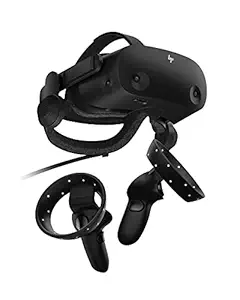
In terms of optical hardware and display clarity, HP earned universal acclaim with the Reverb G2 by employing dual 2.89-inch LCD panels delivering 2160 x 2160 pixels per eye, paired with Valve-designed custom fresnel lenses. This setup virtually eliminated the "screen-door effect" for its generation. However, LG’s contemporary trajectory leaves traditional LCDs behind in favor of Micro-OLED (OLEDoS) panels. These microdisplays offer significantly higher pixel densities, near-infinite contrast ratios, true blacks, and wider color gamuts (covering over 95% DCI-P3). Furthermore, LG’s optical stack relies on compact pancake lenses, drastically reducing optical distortion and the physical volume of the visor compared to HP’s bulkier, fresnel-based housing.
Tracking architecture reveals another critical divide. HP utilized an inside-out optical tracking framework based on visible light cameras (four cameras on the Reverb G2). While adequate for simulation and general navigation, it struggled with dead zones directly above, below, and behind the headset, alongside tracking jitter in low-light environments. LG’s emerging hardware leverages modern mixed reality configurations: high-resolution color passthrough cameras for spatial video, infrared depth sensors, and dedicated machine-vision SLAM tracking. This allows LG-engineered systems to support controller-free hand tracking, spatial mapping, and eye-tracking-assisted foveated rendering—capabilities that HP’s standard consumer models largely lack outside of specialized commercial variants like the Omnicept Edition.
Software ecosystems and long-term viability also separate the brands. HP hardware is fundamentally tethered to Windows Mixed Reality and SteamVR. With Microsoft officially deprecating WMR in modern Windows 11 updates, HP users face software obsolescence unless maintaining legacy OS builds or relying on community-developed translation layers. In contrast, LG is architecting its devices on independent, future-proof platforms such as Android-based XR frameworks powered by Qualcomm Snapdragon platforms and integrated with webOS, ensuring independent, standalone operability without mandatory PC tethering.
Pros & Cons Comparison
HP (Reverb Series / Omnicept)
- Pros:
- Exceptional 2160 x 2160 per-eye resolution with market-leading text and gauge readability.
- Industry-standard off-ear speakers engineered by Valve, delivering superior spatial acoustics.
- Direct PC tether ensures uncompressed visual signal with zero video streaming latency.
- Excellent physical facial interface comfort designed for extended simulation sessions.
- Physical manual interpupillary distance (IPD) mechanical adjustment slider.
- Cons:
- Deprecation of Windows Mixed Reality poses significant software longevity risks.
- Inside-out optical controller tracking suffers from blind spots and hand-loss anomalies.
- Thick, rigid tether cable can be intrusive without dedicated ceiling-suspension rigs.
- Lacks wireless, standalone, or battery-operated functionality entirely.
LG (XR Hardware & Next-Gen Micro-OLED Platforms)
- Pros:
- State-of-the-art Micro-OLED panels delivering true blacks, high dynamic range, and elite color fidelity.
- Slim pancake lens optics eliminate bulky form factors and expand the visual edge-to-edge sweet spot.
- Modern spatial capabilities, including high-definition stereoscopic color passthrough.
- Versatile computing architecture capable of standalone use or low-latency wireless PC streaming.
- Robust future-proofing through integration with modern spatial ecosystems (Meta Horizon OS, Android XR, webOS).
- Cons:
- Significantly higher manufacturing costs, leading to premium, enterprise-tier pricing tiers.
- Historically inconsistent product roadmap with protracted gaps between consumer hardware launches.
- Standalone processing introduces battery weight and thermal management challenges.
- Wireless PC streaming, while convenient, introduces minor compression artifacts compared to native DisplayPort.
Performance, Durability & Value Analysis
From a raw performance standpoint, assessing these brands requires separating compute paradigms. HP delivers relentless visual throughput directly from high-end graphics cards via an uncompressed pipeline. For flight-sim pilots playing Microsoft Flight Simulator or Digital Combat Simulator (DCS), the Reverb G2 operates with virtually zero input lag and crystal-clear instrument legibility. However, its mechanical durability is marred by fragile breakout cables, delicate clip mechanisms, and controller shells built with brittle plastics that are susceptible to impact damage. Value-wise, HP was once the undisputed king of performance-per-dollar in the high-resolution category, regularly dropping below $400 before active production ceased. Yet today, investing in HP hardware carries depreciating software value, as drivers and OS-level platform dependencies are discontinued.
LG represents an investment in durable componentry, advanced display longevity, and future-ready compute frameworks. LG's display manufacturing excellence translates directly to superior burn-in resistance, advanced heat dissipation within compact chassis designs, and robust build tolerances honed by decades of consumer electronics leadership. While LG-engineered devices carry a significantly higher entry barrier—frequently positioned in premium consumer and enterprise territory alongside devices like the Apple Vision Pro and Meta Quest Pro—the long-term value retention is far superior. Access to continuous system updates, active software platform collaboration, and backward-compatible wireless PC-VR streaming tools ensures that LG hardware will remain fully functional and supported throughout the multi-year spatial computing transformation.
Final Verdict: Which Brand Should You Choose?
Your choice between HP and LG comes down to immediate utilitarian needs versus long-term technological viability:
Choose HP if: You are a hardcore PC racing or flight simulation enthusiast who requires an affordable, uncompressed native DisplayPort connection, already maintains a dedicated Windows 10/legacy Windows 11 machine, and can purchase an HP Reverb G2 on the secondary or clearance market at a steep discount. If high-resolution cockpit instrumentation is your primary concern and you never plan to leave your desk or racing rig, HP's optics and off-ear Valve audio remain historically unmatched at their price floor.
Choose LG if: You want an elite, forward-looking spatial computing headset that embraces the modern era of XR. If your priorities include razor-sharp Micro-OLED displays with authentic HDR, slim pancake lenses, seamless mixed-reality color passthrough, and an operating system backed by modern developer support, LG-powered architectures are the definitive winner. While the upfront investment is substantially higher, LG guarantees cutting-edge hardware design, extensive platform viability, and a total freedom from restrictive, tethered operating environments.
Features
When evaluating feature sets within the virtual reality landscape, HP and LG represent fundamentally different engineering philosophies and commercial trajectories. HP firmly established its presence in the high-fidelity PC VR segment through its Reverb series, specifically the Reverb G2. Engineered in collaboration with Valve and Microsoft, the headline feature of HP’s hardware is its class-leading sensory architecture. It boasts dual 2160 x 2160 LCD panels yielding exceptional pixel density and virtually imperceptible screen-door effect, paired with industry-standard Valve off-ear acoustic speakers that deliver spatial, immersive audio without physical ear fatigue. Additionally, HP integrated a native four-camera inside-out tracking array that bypasses external base stations, and launched enterprise editions equipped with sophisticated biometric sensors, including built-in eye-tracking and pupillometry, tailored for corporate simulation and research applications.
Conversely, LG’s consumer VR feature footprint exists primarily as an ambitious pioneer of platform experimentation, custom component supply, and high-spec modular concepts rather than a sustained, standalone consumer ecosystem. LG famously previewed the LG UltraGear VR headset utilizing Valve’s SteamVR tracking ecosystem, which introduced breakthrough ergonomic features such as a 90-degree flip-up visor—allowing seamless transitions between the virtual and physical world—alongside high-refresh-rate OLED panel technology designed to eliminate motion blur and deliver infinite contrast ratios. While LG never fully iterated this into an enduring retail line to directly counter HP's retail dominance, LG’s technological strengths instead manifest in cutting-edge display engineering, including ultra-dense micro-OLED integration developed in partnership with external tech giants, targeting featherweight form factors and next-generation mixed-reality (MR) passthrough capabilities rather than traditional tethered PC gaming.
The practical trade-off between the two brands centers on market viability versus display substrate priorities. HP provides an extant, feature-complete hardware bundle optimized for sim-racers, flight simulation enthusiasts, and design professionals who prioritize raw resolution, integrated spatial audio, and reliable desktop plug-and-play functionality, though its controller tracking volume and ergonomics remain a noted compromise. LG, by contrast, possesses the engineering superiority in organic display technology (OLED/micro-OLED) that solves the LCD contrast and black-level limitations inherent to HP headsets, alongside superior mechanical hinge designs. However, for consumers seeking immediate feature availability, HP delivers a tangible, highly specialized visual and auditory powerhouse, while LG's VR features remain largely sequestered within B2B component manufacturing, historical prototypes, and nascent joint-venture ecosystems.
Performance
When evaluating performance in the virtual reality space, HP has established a tangible legacy through dedicated PC VR engineering, whereas LG’s footprint is defined primarily by advanced component prototyping, mobile-adjacent experiments, and emerging high-spec display partnerships. HP’s flagship effort, the Reverb G2 (developed in collaboration with Valve and Microsoft), set an industry benchmark for PC-tethered visual performance. Driven by dual 2.16-inch LCD panels delivering an exceptional 2160 x 2160 resolution per eye at 90Hz, HP prioritized high-fidelity realism, minimal screen-door effect, and edge-to-edge optical clarity via custom Valve-designed lenses. In contrast, LG never launched a dominant standalone consumer VR platform, but its technical performance shines through display innovation. LG Display’s micro-OLED (OLEDoS) and ultra-high-density panels boast sub-millisecond response times, infinite contrast ratios, and pixel densities exceeding 3,000 to 4,000 PPI. While HP delivered raw processing and rendering muscle via direct GPU tethering, LG's performance legacy lies in pioneering display hardware that eliminates motion blur, ghosting, and color banding far better than traditional fast-switch LCDs.
In practical application, the trade-offs between HP’s realized consumer products and LG’s engineering paradigms center on tracking reliability, latency, and graphical headroom. HP headsets excel in complex simulation environments—such as Microsoft Flight Simulator and iRacing—where uncompressed DisplayPort bandwidth allows host PCs to push native, high-bitrate visual fidelity without decompression lag. However, HP’s reliance on Windows Mixed Reality inside-out tracking exposed operational vulnerabilities, notably blind spots in controller tracking volume and suboptimal latency compared to external base stations. Conversely, LG’s historical prototypes (such as its early SteamVR headset prototype) utilized Valve’s robust Lighthouse tracking, offering sub-millimeter precision and superior multi-angle tracking stability, while its modern XR development focuses on driving next-generation spatial computing with ultra-low display-to-motion latency. For users prioritizing proven, high-resolution rendering and dedicated desktop computational power, HP holds the concrete performance advantage; however, for purists focused on display panel physics, color accuracy, and seamless low-persistence visual speed, LG’s underlying technologies represent the superior engineering benchmark.
Design
When evaluating the design paradigms of HP and LG in the virtual reality space, the comparison largely centers on HP’s refined, consumer-marketed PC VR hardware versus LG’s highly innovative, prototype-driven industrial engineering. HP, best exemplified by its flagship Reverb G2, embraced an ergonomic, human-centric design philosophy heavily influenced by its collaboration with Valve. The headset features a lightweight chassis (roughly 500 grams), balanced weight distribution, plush memory-foam face padding, and off-ear spatial audio speakers that float alongside the ears to prevent heat buildup. Structurally, HP opted for a semi-rigid head strap combined with hook-and-loop velcro tensioners, prioritizing long-term comfort and mechanical simplicity for extended flight-sim and enterprise sessions. Conversely, LG’s prominent venture into VR hardware—initially debuted via the SteamVR prototype and iterated through patent designs—showcased an engineering ambition centered on user accessibility and modularity, marked distinctively by a crown-style halo strap and a friction-hinge flip-up display assembly.
From a technical and functional standpoint, this difference in architectural approach reveals distinct trade-offs in usability and stability. LG’s flip-up visor mechanism, supported by a rear-ratcheting dial, allows users to effortlessly transition between immersive environments and the physical world without removing the entire head harness, making it structurally superior for developers, multitasking gamers, and multi-user demonstrations. However, this cantilevered halo design inherently adds front-heavy mechanical mass, which can introduce wobble during rapid, aggressive head movements. HP avoids this kinetic instability entirely by using a fixed-faceplate chassis that sits flush against the user's facial interface, resulting in a significantly more secure seal and reduced light-bleed. HP also demonstrated superior technical refinement in its physical IPD (interpupillary distance) adjustment slider, which offers smooth, precise, hardware-driven calibration from 60mm to 68mm to match varied cranial anatomies.
Ultimately, HP delivers a mature, cohesive design tailored for functional immersion, combining lightweight materials, exceptional passive acoustic engineering, and elite facial interface comfort that has established a standard for dedicated tethered VR. LG’s design ethos leans toward pioneering modularity and mechanical convenience, providing structural solutions that streamline developer workflows and ease-of-wear at the expense of compact minimalism and center-of-gravity optimization. For consumers seeking a stable, unobtrusive design built purely to maximize prolonged immersion, HP’s executed hardware holds the decisive edge, whereas LG’s structural legacy remains an influential benchmark for mechanical flexibility and ergonomic hardware innovation.
Compare current retail pricing, active promotions, and verified stock availability directly from authorized stores: