Thorens vs Denon: Overview
Comparing Thorens and Denon helps you determine which brand is best suited for your needs in Turntables. Both brands offer strong choices depending on your budget and key feature requirements.
Key Features & Comparison
Evaluate factors such as build quality, warranty, customer satisfaction, and total value before making your final purchase choice between Thorens and Denon.
Affordability
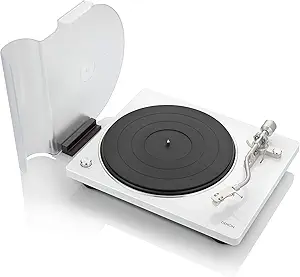
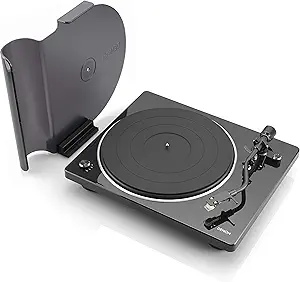
When analyzing the cost spectrum, Denon and Thorens target distinctly different segments of the audio consumer market. Denon firmly positions itself in the budget-to-midrange territory, engineering decks like the DP-300F and DP-400 that deliver exceptional value for casual listeners and burgeoning vinyl enthusiasts. Because Denon leverages modern, high-volume manufacturing practices, their turntables often come bundled with proprietary moving magnet cartridges and integrated phono preamplifiers. This turn-key approach substantially reduces the total cost of ownership, allowing entry-level and intermediate consumers to assemble a functional hi-fi analog setup without investing in external outboard gear or premium auxiliary hardware.
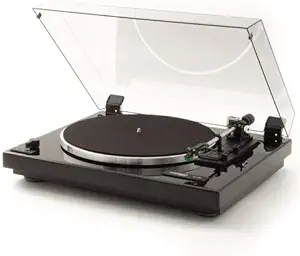
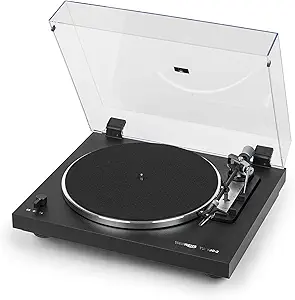
Conversely, Thorens operates largely in the premium, audiophile-grade echelon, carrying price tags that reflect their Swiss heritage and precision German engineering. While Thorens occasionally introduces mid-tier offerings such as the TD 200 series, their flagship catalog—including legendary models like the TD 1600 and TD 124 DD reissue—demands a significant financial commitment. The elevated cost of Thorens turntables stems from high-mass CNC-machined plinths, intricate suspended chassis designs, and bespoke tonearms rather than mass-market electronics. Consequently, Thorens is rarely an economical choice, targeting dedicated audiophiles who view an analog front-end as a long-term acoustic investment rather than a cost-conscious consumer purchase.
Sound Quality
The acoustic presentation of Denon turntables is characterized by warmth, punchiness, and an approachable, musical balance designed to sound pleasant across varied genres. Denon’s popular belt-drive and direct-drive engines are engineered to mitigate basic motor flutter, producing a robust low-end response and clean midrange reproduction suitable for everyday listening. However, due to lighter resonance-prone plastic plinths and baseline tonearm bearings in their consumer-tier units, Denon decks can exhibit a slightly higher noise floor and subtle dynamic compression, which tends to obscure micro-details and soundstage depth during complex orchestral or high-fidelity jazz passages.
Thorens sets an entirely different benchmark for sonic fidelity, delivering audiophile-grade transparency, explosive dynamics, and an exceptionally dark, quiet background. By utilizing precision-tuned sub-chassis suspension systems and high-mass platters, Thorens decks effectively decouple the stylus-groove interface from external acoustic vibrations and structural footfall. This mechanical isolation yields immaculate micro-dynamics, razor-sharp transient attacks, and expansive holographic soundstaging. When outfitted with high-end moving coil or moving magnet cartridges, Thorens tonearms track grooves with surgical precision, extracting subtle timbral nuances and harmonic overtones that remain inaccessible to entry-level architectures.
Features & Functionality
Denon excels in practical utility, equipping many of their models with automated and modern convenience features rarely found in pure audiophile gear. Decks like the DP-300F offer fully automatic push-button operation, while the DP-400 and DP-450USB introduce semi-automatic auto-lift functionality that safely raises the tonearm at the end of a record side to preserve the stylus. Furthermore, Denon appeals to digitally minded consumers by incorporating built-in analog-to-digital converters (ADCs) in specific variants, allowing direct USB ripping of vinyl records to digital flash drives without requiring a personal computer or dedicated audio workstation software.
In stark contrast, Thorens adheres strictly to audiophile purism, focusing its feature set on mechanical optimization rather than electronic automation. Most Thorens turntables are fully manual, deliberately avoiding automatic return mechanisms that could introduce mechanical dragging, resonance, or tonearm interference into the sensitive tracking assembly. Features on a Thorens deck are intensely technical, encompassing electronically regulated DC or direct-drive motors, precision anti-skating dial mechanisms, damped cueing levers, and balanced XLR outputs on their higher-end platforms to eradicate ground hum. The functionality of a Thorens is geared entirely toward acoustic integrity rather than utilitarian lifestyle convenience.
Ease of Use & Setup Processes
Denon designs their turntables with immediate user gratification in mind, making them nearly plug-and-play straight out of the packaging. Factory-aligned cartridges, pre-calibrated tonearm geometries, and clear, standardized step-by-step counterweight markers make the initial assembly process straightforward even for first-time vinyl collectors. Furthermore, the inclusion of switchable onboard phono stages means a listener can directly connect the turntable to an active speaker system or standard AUX input with standard RCA cables, bypassing the technical complexities of impedance matching or grounding wire troubleshooting.
Setting up a Thorens turntable, on the other hand, is an involved, deliberate ritual that typically requires a solid grasp of analog calibration principles. Adjusting suspended chassis models involves fine-tuning conical spring tensions, perfectly leveling the sub-chassis, and methodically dialing in tracking force, vertical tracking angle (VTA), and azimuth. Because many Thorens units are shipped without pre-mounted cartridges or internal preamplifiers, the user must carefully align their chosen cartridge with a protractor and route the signal through a compatible outboard phono stage. While this setup demands patience and precision, it grants the discerning audiophile total granular control over every parameter affecting tracking and sound extraction.