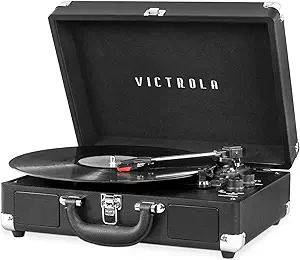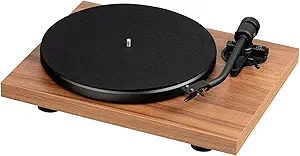







Music Hall vs Victrola: Overview
Comparing Music Hall and Victrola helps you determine which brand is best suited for your needs in Turntables. Both brands offer strong choices depending on your budget and key feature requirements.
Key Features & Comparison
Evaluate factors such as build quality, warranty, customer satisfaction, and total value before making your final purchase choice between Music Hall and Victrola.
Affordability
When evaluating affordability, Music Hall and Victrola operate on entirely different ends of the economic spectrum, representing two fundamentally distinct philosophies in audio hardware manufacturing. Victrola is universally recognized as a mass-market, budget-friendly brand designed to make vinyl accessible with minimal initial financial outlay. With products frequently priced well under a hundred dollars, up to a few hundred for their higher-tier models, Victrola achieves low pricing by utilizing integrated, molded plastic chassis, universal ceramic-cartridge assemblies, and self-contained amplifier/speaker units. For novice listeners or those seeking a casual, aesthetic-driven listening experience without investing in dedicated outboard audio equipment, Victrola delivers undeniable immediate value per dollar spent.
Conversely, Music Hall targets the entry-level to high-end audiophile market, meaning their definition of affordability is anchored in long-term engineering value rather than rock-bottom retail pricing. Even Music Hall's most accessible models (such as the MMF series) represent a significantly higher initial investment, often starting in the mid-hundreds and scaling well into four figures. This elevated cost reflects high-grade components: machined medium-density fiberboard (MDF) plinths, heavy precision alloy platters, carbon fiber tonearms, and pre-mounted Ortofon cartridges. While Victrola is undoubtedly more affordable upfront, Music Hall offers superior component longevity, repairability, and standard upgrade paths, resulting in a more favorable total cost of ownership for listeners who take vinyl fidelity seriously over decades.
Sound Quality
The chasm in acoustic performance between Victrola and Music Hall is substantial, driven by fundamental differences in mechanical isolation, motor regulation, and transducing hardware. Victrola units, particularly their popular suitcase and all-in-one models, rely on inexpensive ceramic cartridges that require high tracking force to maintain groove contact. This mechanical setup, combined with rudimentary tone arms lacking anti-skate controls and lightweight plastic platters, introduces considerable wow and flutter, uneven frequency response, and noticeable inner groove distortion. Built-in speakers further degrade acoustic fidelity by feeding mechanical microphonic vibrations directly back into the plinth and needle, muddying lower frequencies and compressing dynamic range.
Music Hall, on the other hand, engineers its turntables strictly around high-fidelity reproduction, low tracking weights, and acoustic isolation. Utilizing precision-balanced belt-drive mechanisms with isolated DC motors, Music Hall turntables drastically minimize motor noise and rotational speed variations. Their higher-end models employ dual- or triple-plinth construction, physically decoupling the motor, bearing, and tonearm to eliminate resonance transfer. Paired with high-output moving magnet (MM) or moving coil (MC) cartridges, a Music Hall turntable delivers an expansive, transparent soundstage with deep, tight bass, intricate midrange resolution, and airy treble that honors the dynamic potential of the analog groove, far exceeding the acoustic capability of any Victrola product.
Features & Functionality
Victrola differentiates itself through broad, consumer-friendly convenience features designed for a modern, connected lifestyle. Many Victrola decks come equipped with integrated Bluetooth transmitters and receivers, allowing users to either stream vinyl playback to wireless headphones/soundbars or use the turntable itself as a standalone Bluetooth speaker for mobile devices. Furthermore, Victrola frequently incorporates aux inputs, headphone jacks, USB outputs for digitizing vinyl to PC, and multi-speed selector switches (supporting 33 1/3, 45, and 78 RPM records). While their modern 'Stream' series incorporates advanced Wi-Fi functionality engineered specifically for the Sonos ecosystem, their primary functional goal remains versatile, all-in-one consumer convenience.
In stark contrast, Music Hall deliberately eschews digital add-ons, wireless protocols, and auxiliary gimmicks in favor of purist analog functionality. Music Hall features are purely mechanical and aimed at optimizing sonic playback: calibrated counterweights, precision magnetic or spring-based anti-skate mechanisms, fluid-damped cueing levers, and adjustable leveling feet with built-in spirit levels. Speeds are typically limited to 33 1/3 and 45 RPM, often requiring a manual belt repositioning across dual-diameter pulleys to reduce electronic noise. While Victrola offers broad, multifaceted consumer utility, Music Hall’s functionality is laser-focused on audiophile precision, manual adjustability, and the complete elimination of electrical interference from the signal chain.
Ease of Use & Setup Processes
For absolute simplicity and rapid deployment, Victrola holds a clear advantage for non-technical consumers. The vast majority of Victrola turntables are plug-and-play straight out of the box, requiring virtually zero technical calibration. Because the tonearm counterweight, vertical tracking angle (VTA), and anti-skate are factory-fixed, the user simply has to plug the unit into a wall outlet, release the tonearm transit latch, and drop the stylus onto a record. Built-in phono stages and onboard amplification mean there is no need to navigate secondary preamps, ground wires, or receiver input configurations, making the system accessible even to children and complete vinyl novices.
Music Hall requires a more deliberate, methodical setup process that reflects its professional-grade acoustic lineage. Unboxing a Music Hall turntable generally requires installing the platter and drive belt, physically balancing the tonearm, dialing in the counterweight with a tracking force gauge, calibrating the anti-skate mechanism, and adjusting the azimuth and leveling feet. Because many Music Hall turntables do not feature an internal phono preamp, users must also properly route gold-plated RCA cables and attach a dedicated chassis ground wire to an external preamp or receiver. While this multi-step setup demands patience, a steady hand, and basic knowledge of analog audio geometry, it grants the user complete control over mechanical variables, ensuring optimal tracking and eliminating record wear.