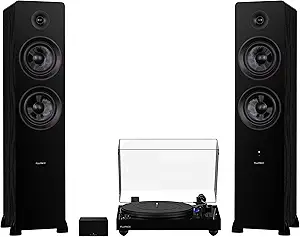
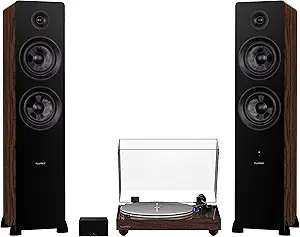
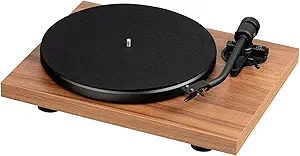
Fluance vs Music Hall: Overview
Comparing Fluance and Music Hall helps you determine which brand is best suited for your needs in Turntables. Both brands offer strong choices depending on your budget and key feature requirements.
Key Features & Comparison
Evaluate factors such as build quality, warranty, customer satisfaction, and total value before making your final purchase choice between Fluance and Music Hall.
Affordability
When analyzing the cost-to-performance ratio between these two brands, Fluance clearly targets the budget-conscious and entry-to-mid-tier audiophile market with exceptional value. Its flagship Reference Series, spanning from the RT80 up to the RT85, operates within a very accessible price envelope, often bundled with premium pre-mounted cartridges like the Ortofon 2M Blue or Nagaoka MP-110 that would independently account for a significant portion of the total retail cost. Fluance achieves this aggressive pricing structure through efficient high-scale manufacturing and a direct-to-consumer business model, minimizing retail markups and passing substantial savings along to listeners who want robust, high-grade hardware without crossing into high-end audio expenditures.
Conversely, Music Hall occupies a broader and generally higher price spectrum, bridging the gap from entry-level hi-fi to uncompromising high-end audiophile territory. While models like the mmf-1.3 and mmf-1.5 offer relatively accessible entry points, Music Hall's defining strength lies in its multi-plinth designs found in mid-to-high-tier offerings such as the mmf-7.3 and mmf-9.3, which command substantially higher prices. The investment in a Music Hall turntable reflects specialized European manufacturing, proprietary acoustic dampening designs, and high-spec tonearms sourced from Pro-Ject. As a result, while Fluance decisively wins on outright affordability and immediate component value under the $500 threshold, Music Hall provides deeper long-term value for dedicated enthusiasts willing to invest in an enduring, acoustically isolated analog platform.
Sound Quality
Sonically, both brands showcase distinct acoustic profiles dictated by their plinth construction, motor isolation, and cartridge pairings. Fluance turntables are renowned for their punchy, dynamic, and clean sound signature, particularly on models like the RT85 that feature dense acrylic platters and precision Ortofon or Nagaoka styli. The acrylic platter couples directly with the vinyl record to effectively mitigate unwanted resonance, resulting in tight, authoritative bass response, distinct stereo imaging, and remarkably low wow and flutter. However, because Fluance relies on a traditional single solid-wood plinth, high-volume playback can occasionally reveal subtle microphonic vulnerabilities or mechanical motor breakthrough compared to decoupled audio designs.
Music Hall, under the engineering vision of Roy Hall, places an extraordinary emphasis on noise floor reduction and tonal neutrality through its signature multi-plinth architecture. By separating the critical sound-reproducing components—the platter, main bearing, and tonearm—from the motor, switch, and wiring across isolated plinths, Music Hall virtually eliminates motor vibration transfer and background hum. This decoupling yields an exceptionally dark, silent background from which delicate micro-details, acoustic decay, and nuanced dynamic textures can emerge organically. Listeners who prioritize expansive soundstaging, layered instrument separation, and liquid midrange realism will find Music Hall's sophisticated isolation engineering acoustically superior, especially in demanding, highly resolving playback environments.
Features & Functionality
Fluance equips its turntables with practical, user-centric features designed to streamline everyday vinyl playback. A standout inclusion across much of the Reference line is an optically controlled auto-stop mechanism, which cleverly halts platter rotation at the conclusion of a record side to prevent premature stylus wear, all without introducing the mechanical friction or tonearm drag typical of fully automatic systems. Additionally, lower-tier Fluance models frequently incorporate switchable onboard phono preamplifiers, high-mass multi-layered MDF plinths, and easily swappable universal headshells, granting users the operational flexibility to swap pre-mounted cartridges in seconds depending on the genre or record condition.
Music Hall eschews automated conveniences in strict adherence to purist audiophile principles, focusing its feature set on acoustic optimization and signal purity. The brand prioritizes fully manual operation to keep the tonearm assembly entirely devoid of extraneous mechanical interference. Functionality is centered around performance-oriented hardware: inverted ceramic bearings, precision-engineered carbon fiber tonearms, electronic speed regulation with push-button 33/45 RPM switching, and integrated spirit levels built directly into the upper plinth for absolute leveling accuracy. While Music Hall lacks conveniences like auto-stop, its structural features—such as adjustable vibration-damping Sorbothane feet and multi-tier decoupling—serve purely to elevate fidelity rather than casual convenience.
Ease of Use & Setup Processes
Fluance excels at providing a welcoming, frictionless onboarding experience that appeals to both beginners and seasoned vinyl enthusiasts. The brand provides exceptionally detailed, step-by-step documentation, complemented by factory-aligned cartridges mounted on standardized H-4 bayonet headshells. Balancing the counterweight, setting the mechanical anti-skate dial, and leveling the heavy-duty rubber-spiked feet requires only basic visual alignment and standard tactile feedback, allowing users to go from unboxing to playback in roughly fifteen minutes. The inclusion of the auto-stop function further enhances daily ease of use, as listeners do not need to hover anxiously over the turntable to manually lift the tonearm the instant the run-out groove is reached.
Music Hall requires a more deliberate, meticulous setup process that aligns with standard audiophile practices. Many Music Hall models utilize a one-piece tonearm design without a detachable headshell, meaning that while cartridge rigidity is maximized, initial alignment, tracking force adjustment, and cartridge swapping demand higher precision, typically requiring a dedicated tracking force gauge and alignment protractor. Furthermore, adjusting models with multi-plinth configurations demands careful leveling of each individual layer using the integrated bubble level, as well as rigging dangling-weight anti-skate systems rather than convenient rotary dials. While this setup demands greater technical patience and understanding from the owner, it instills a deeper mastery over the turntable's mechanical geometry and rewards careful calibration with optimal tracking accuracy.