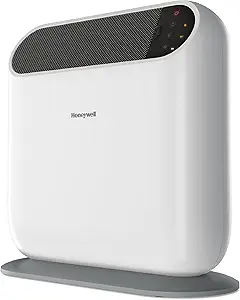

Honeywell vs Heat Storm: Overview
Comparing Honeywell and Heat Storm helps you determine which brand is best suited for your needs in Heaters. Both brands offer strong choices depending on your budget and key feature requirements.
Key Features & Comparison
Evaluate factors such as build quality, warranty, customer satisfaction, and total value before making your final purchase choice between Honeywell and Heat Storm.
Features
Feature sets between these two manufacturers illustrate the divide between traditional mechanical utility and contemporary smart home integration. Honeywell heaters generally excel in functional, straightforward usability. Many of their mid-tier and flagship models incorporate digital thermostats, multiple heat settings (such as EnergySmart modes that regulate power consumption based on ambient temperature), programmable timers, and wide-range oscillation. Honeywell also places an immense emphasis on physical safety features, such as 360-degree tip-over switches, cool-touch composite housings, and robust thermal overheat protection sensors. However, smart functionality like native mobile application support or direct voice-assistant compatibility is largely absent from their mainstream catalog.
Heat Storm, on the other hand, embraces state-of-the-art consumer technology with an emphasis on wireless integration and modern interface design. A significant portion of Heat Storm's catalog features built-in Wi-Fi, allowing users to control their heaters via dedicated smartphone apps, Amazon Alexa, or Google Assistant. Beyond connectivity, their models utilize high-grade infrared quartz elements coupled with patented HMS (Heat Management System) technology to maximize heat transfer without drying out room humidity. Heat Storm also integrates washable electrostatic air filters that trap dust, hidden cord compartments for wall mounting, and digital touchscreens that auto-dim to prevent nocturnal light pollution, making their feature list far more sophisticated than Honeywell's pragmatic offerings.
Performance
Thermal performance and heating dynamics between Honeywell and Heat Storm diverge significantly due to the underlying thermodynamic mechanisms each brand relies upon. Honeywell predominantly leverages ceramic PTC elements and electric coil convection systems driven by high-velocity internal fans. This approach allows Honeywell heaters to deliver rapid, directional heat that quickly takes the chill out of a localized zone or small room. However, this forced-air mechanism can lead to noticeable air drying, uneven heat pockets in larger rooms, and a distinct fan hum that may disrupt noise-sensitive environments like nurseries or executive offices.
In contrast, Heat Storm models utilize infrared radiant heat technology, which works by warming objects, surfaces, and human bodies directly rather than relying solely on cycling air. This method yields a gentler, more natural warmth that preserves ambient relative humidity and reduces respiratory irritation caused by scorched airborne dust. Furthermore, Heat Storm's patented heat exchangers retain thermal energy efficiently, allowing their units to maintain consistent room temperatures with less aggressive cycling. While Heat Storm may take slightly longer than a forced-air Honeywell unit to raise the overall air temperature of an uninsulated room from a cold start, its sustained heat output, silent or whisper-quiet blowers, and even thermal distribution provide a distinctly superior ambient comfort profile.
Design
From an industrial design standpoint, Honeywell prioritizes portable utility, practical handling, and conventional form factors. Their product line predominantly features freestanding plastic-molded towers, compact cubes, and rolling radiators finished in neutral blacks, grays, and whites. These heaters are engineered to be easily moved from room to room, featuring integrated carry handles, lightweight chassis, and compact footprints that fit neatly under desks or in room corners. While undeniably functional, Honeywell's aesthetics lean heavily toward traditional small appliances, meaning they tend to blend into utilitarian spaces rather than enhancing modern interior décor.
Heat Storm takes a radically different aesthetic approach, prioritizing sleek, architectural forms and zero-footprint mounting capabilities. Many of Heat Storm's most popular models are engineered specifically to be mounted directly onto standard drywall over existing electrical outlets, completely clearing floor space and hiding unsightly power cords. Their low-profile, clean-lined casings resemble contemporary audio equipment or high-end climate fixtures rather than space heaters. The materials feel premium and durable, with carefully engineered heat-dissipating grills that stay safe to the touch even during prolonged operation at maximum wattage. For users who value minimalist interior design and floor-space conservation, Heat Storm's design language is far more refined and modern.
Compare current retail pricing, active promotions, and verified stock availability directly from authorized stores:
Compare current retail pricing, active promotions, and verified stock availability directly from authorized stores: