
Heat Storm vs Duraflame: Overview
Comparing Heat Storm and Duraflame helps you determine which brand is best suited for your needs in Heaters. Both brands offer strong choices depending on your budget and key feature requirements.
Key Features & Comparison
Evaluate factors such as build quality, warranty, customer satisfaction, and total value before making your final purchase choice between Heat Storm and Duraflame.
Features
In terms of functional technology and smart capabilities, Heat Storm holds a decisive edge over Duraflame. Many flagship Heat Storm models come fully integrated with built-in Wi-Fi, allowing users to control ambient temperature, schedule operation intervals, and adjust modes via a dedicated smartphone app or voice assistants like Amazon Alexa and Google Assistant. Additionally, Heat Storm integrates sensitive digital thermostats, quiet cross-flow blower systems, washable lifetime air filters, and advanced safety shutoffs that trigger automatically if the grill is obstructed or the unit tilts past acceptable angles.
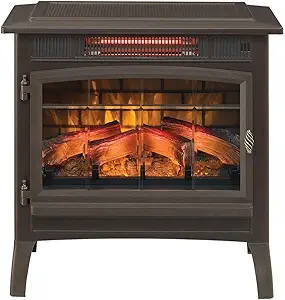
Duraflame, by contrast, concentrates its feature set on aesthetic customization and atmospheric engineering. Rather than app integration, Duraflame units emphasize patent-protected flame effects, such as their 3D Flame Effect technology, which offers adjustable brightness, color spectrums, and flicker speeds that can operate independently of the heating element. Most Duraflame heaters include physical multifunction remote controls, baseline digital thermostats, and their proprietary Safer Sensor fire-prevention technology, which automatically powers down the unit if objects cover the heat output grill. While functionally robust, Duraflame's interface relies on traditional tactile operations rather than the connected-home ecosystem Heat Storm embraces.
Performance
Performance benchmarks between these two brands reveal distinct thermodynamic delivery profiles despite identical power ratings of 1,500 watts (approximately 5,200 BTUs). Heat Storm relies on patented HMS dual-wall infrared heating assemblies that pair quartz elements with thermal-mass heat exchangers. This design optimizes convection transfer by moving air through internal thermal chambers, resulting in rapid, uniform room heating without burning ambient humidity or reducing oxygen levels. The focused, fan-assisted airflow makes Heat Storm exceptionally capable of quickly raising the ambient temperature across entire bedrooms and home offices up to 500 or 1,000 square feet, depending on the model tier.
Duraflame's infrared quartz heaters also excel at preserving natural relative humidity, preventing the harsh, dry air typical of standard ceramic heaters. However, their heat distribution is often more localized and radiant, casting steady, enveloping warmth directly in front of the unit before slowly cycling through the wider room via quiet centrifugal fans. In practical testing, Duraflame stoves provide exceptional direct comfort for occupants in living rooms and dens, but they typically warm up a larger room slower than Heat Storm's focused convection-assisted airflow. Nevertheless, Duraflame's thermal retention is reliable, offering quiet, long-duration heating without excessive cycling noise.
Design
The industrial design of Heat Storm heaters is clean, modern, and intentionally minimalist. Recognizing that floor space is at a premium in many modern dwellings, Heat Storm designs many of its core models with dual-purpose configurations, featuring built-in cord wraps, removable stabilizing feet, and integrated wall-mounting brackets. When hung on drywall, these low-profile units sit flush against the wall, hiding cords neatly and staying well out of reach of pets and children. The aesthetic consists of matte textured plastics, modern LED numerical displays that fade when idle, and neutral colorways that easily blend into contemporary interiors.
Duraflame completely diverges by championing vintage, furniture-grade industrial design. Their product catalog is dominated by cast-iron-style freestanding stoves, bevel-glass viewing doors, and detailed mantel cabinetry that mimics traditional wood-burning hearths. While this construction delivers charming aesthetics, it carries a substantially larger spatial footprint and significantly heavier weight, limiting portability and eliminating the option for wall-mounting. For consumers seeking architectural charm and a rustic hearth aesthetic, Duraflame’s design brings an unmatched cozy atmosphere, while Heat Storm remains the clear winner for sleek, space-saving architectural minimalism.
Compare current retail pricing, active promotions, and verified stock availability directly from authorized stores: