DeLonghi vs Honeywell: Overview
Comparing DeLonghi and Honeywell helps you determine which brand is best suited for your needs in Heaters. Both brands offer strong choices depending on your budget and key feature requirements.
Key Features & Comparison
Evaluate factors such as build quality, warranty, customer satisfaction, and total value before making your final purchase choice between DeLonghi and Honeywell.
Features
In terms of feature integration, DeLonghi takes a sophisticated approach centered on energy management and user ergonomics. Many of their premium convection and radiator units feature the proprietary 'ECO Plus' mode, which automatically modulates power settings to maintain a chosen temperature while systematically reducing energy consumption by up to 20 to 40 percent. DeLonghi units often incorporate full-function digital displays, soft-touch panels, integrated cord wraps that do not compromise the chassis lines, and programmable 24-hour timers. In their higher-tier models, Wi-Fi connectivity and smartphone integration (compatible with Apple HomeKit or Google Assistant) provide sophisticated automation that appeals to smart-home enthusiasts seeking scheduled climate control.
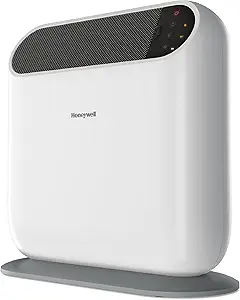
Honeywell counters with practical, user-friendly functionality that focuses on accessibility rather than luxury automation. A signature implementation is Honeywell's widespread adoption of digital 'ThermaWave' or 'Genius' multi-stage temperature interfaces and dual-dial analogue controls that are virtually foolproof to operate. Feature sets often emphasize broad heat dispersal through motorized 360-degree oscillation or dual-directional louvers. While smart connectivity is rarer within Honeywell's lineup, they lead the category in functional physical feedback, such as clear color-coded safety indicators, integrated cool-touch carrying handles, and robust thermal shut-off sensors that trigger reliably if airflow is choked, offering pure utility without a steep learning curve.
Performance
The performance profile of DeLonghi heaters is defined by radiant thermal consistency and silent operation. Their oil-filled radiators, utilizing diathermic oil that never needs refilling, operate through natural convection and thermal radiation. This means they heat objects and walls rather than directly stripping moisture from the air, preserving ambient humidity and preventing the dry throat phenomenon common with cheaper heaters. While DeLonghi heaters have a noticeable latency—often taking 15 to 25 minutes to fully reach effective radiant output—their thermal retention is superior. Once turned off, the dense metal fins continue to radiate heat for an extended period, creating an exceptionally stable thermal floor.
Honeywell heaters operate on an opposing thermodynamic philosophy: immediate, high-velocity heat projection. Utilizing positive temperature coefficient (PTC) ceramic heating elements paired with powerful axial fans, a Honeywell tower can raise the ambient temperature of a localized zone within two to three minutes of activation. This makes Honeywell drastically more effective for drafty basements, cold entryways, or quick morning warm-ups. However, this forced-air method comes at the expense of acoustic comfort; fan-forced motors generate ambient white noise ranging from 45 to 55 decibels, and the intense airflow can quickly dehydrate the air within smaller, enclosed rooms.
Design
From an aesthetic and structural perspective, DeLonghi is firmly rooted in high-end European industrial design. Their appliances feature clean, minimalist silhouettes, seamless steel sheet metal, rounded safety corners, and subtle matte finishes that integrate naturally with contemporary home decor. Models such as the Radia S or the Mica panel series showcase an attention to architectural harmony, concealing heating fins within elegant chimneys that both accelerate airflow via the Venturi effect and prevent burns from exposed hot elements. Even the castors on DeLonghi units are frequently pre-assembled and fold seamlessly into the base, eliminating awkward setup hurdles while maintaining a streamlined footprint.
Honeywell adopts a strictly utilitarian, form-follows-function design language dominated by rugged, injection-molded plastics and industrial metal grilles. Their silhouettes are generally rounded, compact, and purpose-built for mobility and stability rather than visual statement. While they may not elevate the interior aesthetic of a modern living room, Honeywell's designs are deeply functional: wider bases prevent tipping on deep carpets, recessed handles make carrying lightweight units effortless, and high-contrast labels ensure that settings can be read easily by users of all ages. It is an aesthetic of pragmatic longevity, favoring impact resistance and structural simplicity over stylistic sophistication.