



Rexing vs Galphi: Overview
Comparing Rexing and Galphi helps you determine which brand is best suited for your needs in Dash Cams. Both brands offer strong choices depending on your budget and key feature requirements.
Key Features & Comparison
Evaluate factors such as build quality, warranty, customer satisfaction, and total value before making your final purchase choice between Rexing and Galphi.
Features
In terms of feature architecture, both brands attempt to satisfy modern vehicle monitoring requirements, but they approach their functional ecosystems with differing levels of technical refinement. Galphi frequently emphasizes expansive baseline packages, often packaging three-channel recording setups—front exterior, interior infrared cabin, and rear exterior—into a single, highly affordable bundle. These systems typically integrate standard convenience elements such as automated G-sensor event locking, loop recording, and basic Wi-Fi connectivity for smartphone-based clip retrieval. However, the proprietary companion applications for Galphi units can occasionally suffer from erratic pairing protocols and slower data transfer rates, reflecting a software tier built around off-the-shelf reference designs.
Rexing, conversely, adopts a more sophisticated approach to feature deployment, emphasizing ecosystem cohesion and advanced functionality. While entry-level Rexing units provide reliable dual-channel monitoring, higher-tier models incorporate integrated GPS logging for precise speed and route tracking, voice command capabilities, and advanced driver-assistance systems (ADAS) that alert motorists to lane departures and forward collision risks. Furthermore, Rexing’s mobile software experience is noticeably more polished, delivering stable Wi-Fi performance, seamless cloud management capabilities on select models, and broader support for third-party viewing applications. Galphi wins on sheer multi-lens inclusion out of the box, but Rexing offers a far more cohesive and dependable technology suite.
Performance
Performance benchmarks reveal clear distinctions in optical fidelity, sensor calibration, and thermal durability between the two manufacturers. Rexing consistently utilizes proven image sensors, frequently sourcing components from industry leaders like Sony to achieve superior Wide Dynamic Range (WDR) and high-bitrate video encoding. This hardware rigor translates directly into vital real-world metrics, such as accurate license plate legibility at highway speeds and reduced highlight blowout under harsh streetlights. In contrast, while Galphi advertises competitive resolutions like 2.5K or 4K on paper, real-world footage often reveals higher compression artifacts, narrower dynamic range, and digital noise in adverse conditions, making fine vehicular details harder to resolve during high-speed nocturnal incidents.
Thermal resilience represents another critical divergence in operational performance. Rexing extensively deploys supercapacitor power supplies across its core product lines, a crucial engineering choice that eliminates the swelling and catastrophic failure risks associated with traditional lithium-ion batteries under extreme heat or freezing cold. Galphi models occasionally rely on conventional lithium-ion batteries or less robust capacitor designs, which can limit operational lifespans in sun-baked windshield environments. For continuous parking surveillance and uninterrupted high-temperature endurance, Rexing proves distinctly superior, whereas Galphi is adequate for standard daytime commuting in moderate climates.
Design
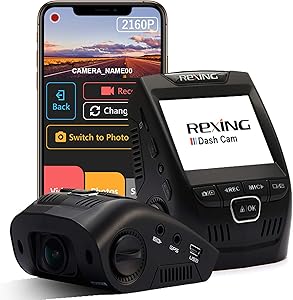
From an industrial design standpoint, Rexing maintains an iconic signature aesthetic characterized by its low-profile wedge form factor. This wedge architecture allows the camera body to adhere flush against the windshield glass, significantly reducing optical glare, vibration, and driver visual obstruction while maintaining a factory-installed, stealthy appearance from outside the vehicle. By eschewing traditional hanging suction mounts on most of its flagship models, Rexing minimizes windshield clutter and ensures stable footage. The button placement, heat dissipation vents, and angled lens adjustments on Rexing devices reflect deliberate mechanical engineering tailored specifically for automotive cockpits.
Galphi generally utilizes more generic, utilitarian form factors that resemble miniature traditional digital cameras or elongated horizontal casings hung from suction or adhesive mounts. While functional, these hanging configurations tend to be more noticeable from the vehicle exterior and can occupy a larger portion of the driver's forward field of vision. On the interior, Galphi’s multi-lens units often integrate the cabin camera directly onto the primary housing alongside a small LCD screen, which is convenient for quick angle verification but can clutter the device interface. Rexing achieves a higher level of discreet integration and structural elegance, while Galphi prioritizes straightforward, all-in-one physical utility.
Compare current retail pricing, active promotions, and verified stock availability directly from authorized stores:
Compare current retail pricing, active promotions, and verified stock availability directly from authorized stores: