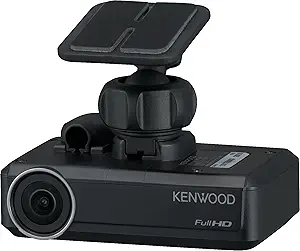
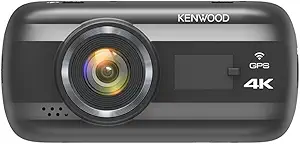
Nextbase vs Kenwood: Overview
Comparing Nextbase and Kenwood helps you determine which brand is best suited for your needs in Dash Cams. Both brands offer strong choices depending on your budget and key feature requirements.
Key Features & Comparison
Evaluate factors such as build quality, warranty, customer satisfaction, and total value before making your final purchase choice between Nextbase and Kenwood.
Features
Feature-wise, Nextbase sets the benchmark for safety-centric technology, equipping its flagship models with integrated Emergency SOS systems that dispatch vital medical telemetry to rescue services when severe collisions are detected. Furthermore, Nextbase embraces modern software conveniences, offering voice control through built-in Amazon Alexa, integrated What3Words location tracking, and an extensive suite of modular add-ons—such as plug-and-play rear-facing or cabin-view modules that slot directly into the main unit. While their companion mobile applications can occasionally suffer from firmware-dependent connectivity friction, the breadth of capabilities within the Nextbase ecosystem remains unmatched for connected safety.
Kenwood takes a more conservative, utilitarian approach to its feature architecture, emphasizing driver assistance essentials over connected smart tech. Kenwood dash cams prominently feature robust Advanced Driver Assistance Systems (ADAS), such as lane departure warnings, front collision alerts, and delay stop signals, which function locally on the unit without relying on smartphone data pairing. Additionally, select Kenwood models feature direct link interfaces for compatible Kenwood multimedia receivers, allowing drivers to review footage and adjust settings via their dashboard touchscreen. While Kenwood lacks consumer-facing lifestyle integrations like Alexa or Emergency SOS, its feature execution is deeply stable and integrated into vehicle telemetry.
Performance
In optical performance, Nextbase demonstrates superior tuning for evidentiary precision, especially in dynamic and low-light environments. Nextbase models often feature wide f/1.3 to f/1.6 apertures paired with custom-tuned image processors and integrated polarizing filters (CPL) designed to eradicate windscreen glare. This optical stack yields exceptional contrast, allowing license plates and road signs to remain legible across high-speed differentials and harsh direct sunlight. However, processing native 4K or high-bitrate 1440p footage alongside cloud synchronization demands high-spec U3 microSD cards, and intensive continuous recording can generate notable chassis heat during long summer drives.
Kenwood counters with balanced sensor performance and exemplary electrical stability, prioritizing uninterrupted uptime over pushing consumer video boundaries. Kenwood dash cams leverage tuned HDR and WDR processing that manages sudden exposure shifts—such as entering or exiting tunnels—with minimal artifacting and frame dropping. While Kenwood video output can appear softer and exhibit lower dynamic range compared to top-tier Nextbase units in pitch-black night conditions, it delivers exceptionally consistent frame pacing. Where Kenwood notably triumphs is in thermal endurance; their units frequently employ industrial-grade supercapacitors instead of standard lithium batteries, making them far less prone to thermal shutdowns or battery degradation in extreme climates.
Design
The physical design of Nextbase dash cams revolves around driver ergonomics and intelligent ergonomics, most notably embodied in their patented Click&Go PRO magnetic mounts. This system routes power directly through the mount rather than the camera chassis, allowing the driver to effortlessly detach the unit to prevent theft or review footage without untangling cabling. Nextbase enclosures are sculpted with a modern, consumer-tech aesthetic, incorporating vivid IPS touchscreens that simplify on-device menu navigation, although their overall profile tends to be bulkier and more conspicuous on the windshield than minimalist wedge-style alternatives.
Kenwood emphasizes stealth, industrial longevity, and discreet placement in its design language. Many Kenwood models sport ultra-compact, low-profile wedge or cube form factors that nestle cleanly behind the rearview mirror, minimizing driver field-of-view obstructions and lowering the likelihood of vehicular break-ins. The physical interfaces rely heavily on tactile buttons rather than high-resolution touchscreens, reflecting an automotive-first design standard that ensures operation remains dependable even when the driver is wearing gloves or operating in sub-zero cabin conditions. Kenwood's mounting solutions, while traditional and less modular than Nextbase's magnetic base, provide a rigid, vibration-resistant anchor suited for rough road travel.