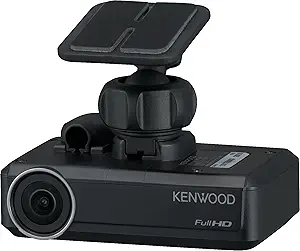
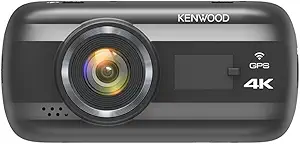
Kenwood vs Cobra: Overview
Comparing Kenwood and Cobra helps you determine which brand is best suited for your needs in Dash Cams. Both brands offer strong choices depending on your budget and key feature requirements.
Key Features & Comparison
Evaluate factors such as build quality, warranty, customer satisfaction, and total value before making your final purchase choice between Kenwood and Cobra.
Features
Kenwood’s feature set is deeply rooted in hardware-centric utility and multimedia synergy. Many of their upper-tier dash cams feature built-in polarizing filters to cut windshield glare, dual-channel front and rear expansion capability, and proprietary integration with Kenwood multimedia receivers, allowing users to control settings and view live video feeds directly from their dashboard touchscreens. Furthermore, Kenwood integrates comprehensive Advanced Driver Assistance Systems (ADAS), such as lane departure warnings and front collision alerts, alongside specialized parking modes that utilize g-sensors and vibration detection to safeguard unattended vehicles.
Cobra counters with a heavy focus on cloud infrastructure and connected smart functionality, epitomized by its Drive Smarter ecosystem. Cobra dash cams typically include built-in Wi-Fi and Bluetooth that connect directly to a smartphone app, providing access to crowdsourced radar, laser, and road-hazard warnings sourced from millions of drivers across the Cobra and Escort user bases. Select flagship Cobra models also introduce live cloud video streaming, emergency Mayday alerts that contact designated loved ones in an impact, and heads-up navigation prompts overlaid directly on the camera display, making Cobra’s software footprint considerably more interactive and safety-oriented than Kenwood’s utilitarian approach.
Performance
In terms of raw imaging performance, Kenwood holds a distinct advantage, particularly in optical clarity, dynamic range, and nighttime legibility. Leveraging premium CMOS sensors—frequently Sony STARVIS architecture—and wide aperture lenses, Kenwood cameras consistently capture sharper license plates and street signage under challenging lighting conditions. Their processing pipelines handle extreme contrast effortlessly, preventing high-beam headlights or neon signs from blowing out crucial details. Frame rates are maintained steadily, and footage playback through Kenwood's dedicated desktop software provides accurate GPS-tagged speed, location, and three-axis g-force readouts with minimal latency.
Cobra delivers respectable video resolution, with models reaching 2K and 4K definitions, but its image processing tends to emphasize high contrast and saturation, which can occasionally crush shadow details during deep-night drives. Where Cobra shines in performance is in its responsiveness to environmental threats and alert timeliness. The GPS locking mechanism is fast and robust, ensuring camera-trap warnings chime precisely when needed. However, continuous high-bitrate recording under hot ambient conditions can occasionally cause Cobra units to run hotter than their Kenwood counterparts, occasionally throttling wireless transfer speeds or requiring high-end endurance microSD cards to maintain uninterrupted operation.
Design
From an industrial design standpoint, Kenwood favors a discreet, compact form factor engineered to blend naturally behind a vehicle's rearview mirror. Their cameras frequently adopt a wedge or miniature cube profile, constructed with matte, heat-resistant plastics that resist fading and thermal warping under direct summer sunlight. Mount engineering is a major Kenwood strength; they utilize low-profile adhesive pads and quick-release magnetic cradles that minimize windshield vibration, ensuring the camera stays firmly rooted over bumpy road surfaces while remaining easy to detach for off-car review or theft prevention.
Cobra tends to design slightly larger, more commanding units that double as visual driver information hubs. Often featuring larger IPS display screens on the rear, Cobra dash cams are meant to be viewed by the driver to display live speed limits, radar alerts, and direction prompts. While this makes Cobra units less stealthy from the outside, their industrial housing feels solid and tactile, featuring pronounced physical buttons that are easy to press without looking away from the road. Cobra's mounting brackets are sturdy, though often slightly bulkier due to integrated power passthroughs and GPS modules, reflecting their dual role as both a camera and a dashboard alert console.